Copyright © 2025
George R. Morgan
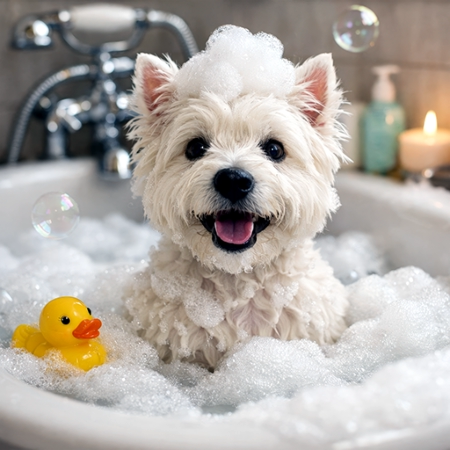
Giving Your Westie a Bath
A Westie’s white coat can look beautiful, but bath time should be
about more than appearance. A good bath can help remove dirt,
allergens, and odors while giving you a chance to notice changes in the
skin, coat, ears, paws, or overall comfort. The key is to use products
made specifically for dogs, keep the experience calm, and pay
attention to how your Westie responds. If your dog has skin allergies,
ear problems, unusual odor, sores, redness, or other health concerns,
ask your veterinarian for guidance before choosing a bathing routine.
Preparing for the Bath
Gather Supplies
Before you begin, gather everything you need so your Westie is not left unattended in the bath area. Use a gentle shampoo clearly
labeled and formulated specifically for dogs. Products made for people, cats, horses, or other animals may not be safe for dogs, even if
they seem mild or natural. You may also want a dog-safe conditioner if appropriate, a soft washcloth, a cup or handheld sprayer for
rinsing, a non-slip mat, several towels, and a hairdryer only if your Westie tolerates it on a low, cool setting.
Because Minnie has severe allergies, we take her special shampoo and conditioner whenever she goes to the groomer. We also bring her
own treats because she cannot eat just any treat, and our groomer likes to reward the dogs during the visit. Providing Minnie’s
approved products and treats helps the groomer care for her safely while still making the experience positive.
Brush Your Westie
•
Brush your Westie’s coat gently before bathing to remove loose dirt, tangles, and mats.
•
Mats can tighten when wet, so serious matting should be handled carefully and may be better addressed by a professional groomer.
Prepare the Bath Area
•
Use a sink or bathtub with a non-slip mat, and keep one hand near your Westie to reduce the risk of slipping or jumping.
•
Use only a few inches of lukewarm water. Water that is too hot can irritate or burn the skin, while water that is too cold can make the
bath stressful and uncomfortable.
Bathing Process
Introduce Your Westie
•
Introduce your Westie calmly and do not force the process if your dog is frightened. Speak gently, move slowly, and give your dog
time to adjust.
•
Treats, praise, and short breaks can help create a better association with bath time.
Wet the Coat
•
Using a cup or handheld sprayer, wet the coat slowly with lukewarm water while avoiding the eyes, nose, mouth, and ear openings.
•
Do not pour or spray water into the ears. Use extra care around the face, and use a damp washcloth rather than shampoo or direct
spray near the eyes.
Apply Shampoo
•
Use the dog shampoo according to the label. If the label allows dilution, diluting it with water may make it easier to spread and rinse
out.
•
Massage gently from the neck down the back, chest, legs, and tail, avoiding irritated skin, wounds, the eyes, and the inside of the ears.
•
Use a damp washcloth to clean the face gently, and do not rub the eyes or allow shampoo to enter the mouth or nose.
Rinse Completely
•
Rinse thoroughly with lukewarm water until no shampoo or conditioner residue remains.
•
Leftover product can irritate or dry the skin, especially on dogs with sensitivities or allergies.
Condition (Optional)
If you use a conditioner, choose one formulated specifically for dogs and follow the label exactly. Rinse completely so residue does not
remain on the coat or skin.
Drying Your Westie
Towel Dry
•
Wrap your Westie in a soft towel and gently blot the coat to remove extra water.
•
Avoid hard rubbing, which can cause tangles and may irritate sensitive skin.
Use a Hairdryer
•
If your Westie tolerates a dryer, use a low, cool setting while brushing gently. Some dogs do better with towel drying or help from a
professional groomer.
•
Keep the dryer moving, hold it away from the skin, and stop if your dog becomes frightened, overheated, restless, or uncomfortable.
Final Brush
Once the coat is dry, brush gently to remove tangles and check the skin for redness, irritation, sores, or anything unusual.
Post-Bath Tips
Check Ears and Nails
•
Wipe only the visible outer ear with a soft, slightly damp cloth if needed. Do not push anything into the ear canal, and contact your
veterinarian if you notice odor, discharge, redness, swelling, repeated head shaking, scratching, pain, or balance changes.
•
Trim nails only if you are comfortable doing so safely. If you are unsure, ask your groomer or veterinarian for help, especially if the
nails are dark, overgrown, cracked, painful, or bleeding.
Reward Your Westie
End the bath with praise, a treat, or a short enjoyable activity if your Westie wants it. Keeping bath time calm and positive can make
future baths easier.
Bathing Frequency
•
Bathing frequency depends on your Westie’s coat, activity level, skin health, odor, allergies, and veterinarian or groomer guidance.
Some dogs may do well with occasional baths, while others may need a different schedule or medicated bathing plan.
•
Overbathing or using the wrong product can dry or irritate the skin, so ask your veterinarian if your Westie needs frequent bathing
because of itching, odor, allergies, or skin problems.
Bathing your Westie does not have to be stressful, but it should always be safe, gentle, and suited to the dog in front of you. Use dog-specific
products, protect the eyes and ears, rinse and dry thoroughly, and watch the skin, coat, paws, and ears for anything unusual. A clean coat is
wonderful, but your Westie’s comfort and health matter most. If bathing causes irritation, fear, odor changes, or anything else that does not
seem normal, ask your veterinarian or a trusted groomer for guidance.